
Maths
KS1
At Hatherley Infant School, we foster positive ‘can do’ attitudes, believe all children can achieve in mathematics and teach for secure and deep understanding of mathematical concepts. We use mistakes as an essential part of learning and provide challenges through rich problem-solving opportunities.
For our children, the most important thing is having a strong understanding of the foundational knowledge needed to take them on to the next step in their learning. Early on, teachers identify the foundational knowledge and prioritise this in their lessons, making lessons fun, interactive and practical. Manipulatives are at the heart of our lessons. Children learn how to use these practical resources to support their learning before applying it independently. ‘Mastering’ maths means children acquire a deep, long-term, secure and, most importantly, adaptable understanding of the subject.
Teachers use a long-term plan, utilising the Can Do Maths scheme, to ensure that the entire curriculum (linked below) is covered over the course of a school year. The planning takes its form in daily PowerPoints, which act as a prompt and guide for the children. The sequence of slides is set out below:
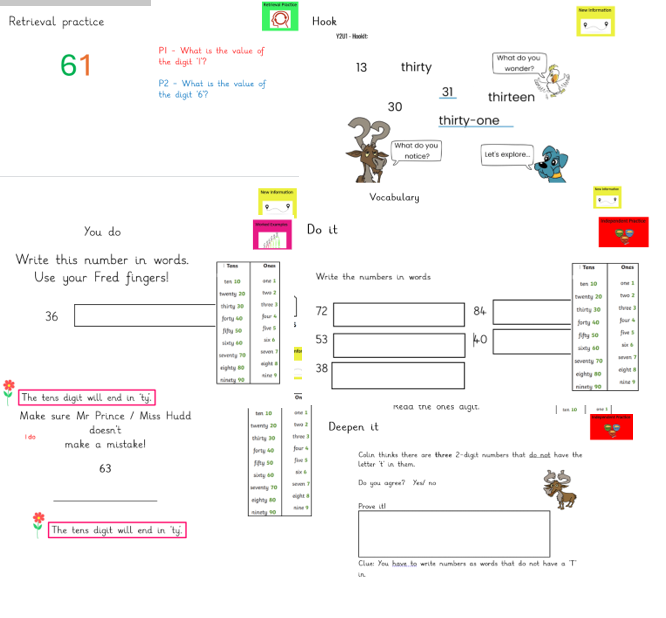
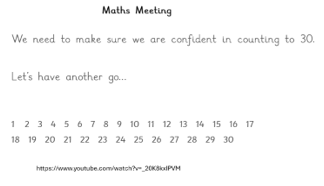
In addition, each day, children revisit and practise previous knowledge and skills in a daily ‘Maths Meeting’.
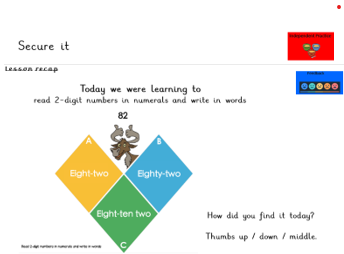
Questioning is the key to success in all our mathematics sessions and children are always asked to ‘prove it’ and higher order questions in order to develop their mathematical fluency, oracy and vocabulary.
EYFS
The Early Years Foundation stage is guided by the requirements and recommendations set out in the Early Years document ‘Development Matters’ (pg 32 -36). Lessons in the early years also follow the Can do Mathematics scheme. Children are encouraged to use, enjoy, explore, practice and talk confidently about mathematics using reasoning and correct vocabulary. The children are exposed to a variety of problems, and use practical resources like Numicon, ten frames and other concrete materials to master the key concepts, so that they see themselves as Mathematicians.